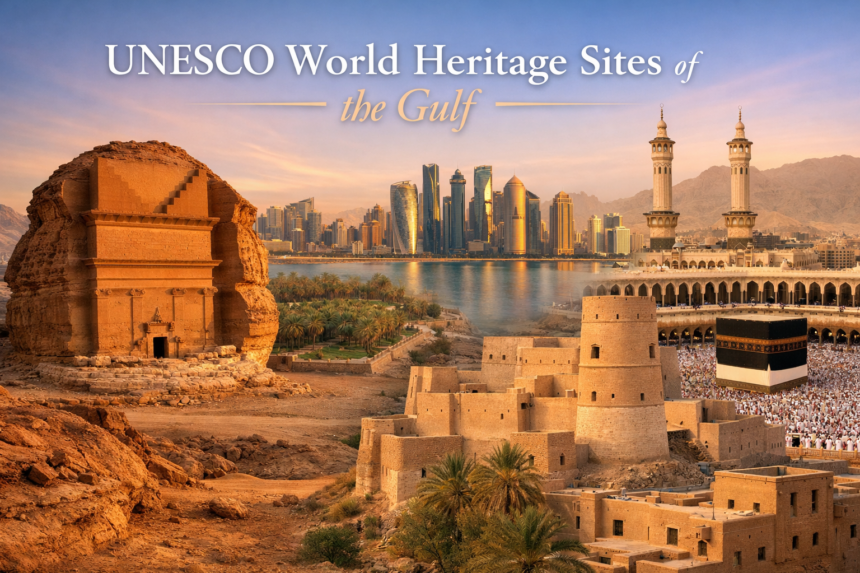
UNESCO World Heritage Sites in Gulf Countries: Gulf boasts modern cities, luxury, rapid growth, yet hosts world’s valuable history culture. Many spots in Gulf countries, UNESCO says they’re World Heritage Sites, showing each place matters worldwide and holds value for everyone.
These sites show old civilizations trade routes cultures and buildings; all shaped area long ago.
What UNESCO World Heritage Status Means
UNESCO World Heritage status, It goes to places with incredible cultural, historical, or natural significance. To keep these sites safe for everyone to enjoy and learn from for years to come, they’re protected.
Gulf sites listed by UNESCO? Think early settlements Islamic heritage ocean history maybe strange desert cultures.
United Arab Emirates: Cultural Heritage and Early Settlements
UAE boasts key UNESCO spots showing ancient life plus cultural growth.
Al Ain Oasis in Abu Dhabi, UAE’s most significant heritage sites, maybe. It’s a display, see? Old oasis setup, plus ancient water runs. Helped farms plus towns for ages; true story. Site shows early folks adapted to desert life in sustainable ways you know.
Saudi Arabia: Ancient Cities and Trade Routes
Saudi Arabia boasts some UNESCO World Heritage Sites showing just how historically and culturally rich it is.
Al-Hijr in Madain Salih, quite something, became country’s first UNESCO spot featuring some Nabataean tombs cut right into sandstone cliffs.
At-Turaif District in Diriyah, That’s where Saudi state got going and reflects old Najdi design.
Jeddah’s Al-Balad area shows how city served Makkah pilgrims over time.
Rock art in Hail region showcases old carvings; they document early human life and movement across Arabian Peninsula.
Oman: Forts, Irrigation Systems, and Archaeology
Oman’s UNESCO sites, Think old buildings and how folks managed water early on.
Think of Bahla Fort, a huge mud-brick place that really shows off old Islamic building styles.
Aflaj irrigation shows old methods for water spread, still going on today.
Oman’s Land of Frankincense showcases its historical position within global trade routes; this area connected far-flung civilizations.
Qatar: Trade and Urban Heritage
Qatar has an old UNESCO site that shows its major role in historical trade and settlements.
So Al Zubarah site, A busy coastal hub way back when; folks traded pearl hunted and just did business there apparently. Site offers glimpse into what Gulf urban life looked like centuries ago.
Bahrain: Ancient Civilizations and Pearling Heritage
Bahrain’s UNESCO sites, They show you its old history and seafaring ways.
Bahrain Fort—Qal’at al-Bahrain—rests above ancient layers, settlements linked to Dilmun civilization.
Pearling, Testimony of an Island Economy, well, it really gets to heart of pearl diving heritage in Bahrain and those communities who depended on it centuries ago.
Kuwait and Other Gulf States
Gulf countries might not have loads of UNESCO spots yet but work continues preserving sites truly worthy of nomination. Shows a rising tide region-wide for keeping heritage alive plus getting worldwide attention perhaps.
Importance of UNESCO Sites for Tourism
Unesco World Heritage Sites, They’re kinda big for cultural tourism. Folks keen on history, digging up old stuff, really neat buildings, plus genuine cultural vibes? That’s exactly who’d engage.
For Gulf nations, such spots can help tourism branch out plus give travelers good reason for exploring deeper historical roots of this region.
Preserving Heritage for the Future
Protecting UNESCO sites requires careful conservation, community involvement, and sustainable tourism practices. Gulf countries invest heavily in restoration projects, research, and visitor education to ensure these sites remain protected while accessible.
Modern development is balanced with heritage preservation to maintain authenticity and historical integrity.
Also Read About Muscat 3-Day Itinerary