Gulf region—United Arab Emirates, Saudi Arabia, Oman, Qatar, Bahrain plus Kuwait—has rich cultural traditions showing its history environment and community life. Folk dance plus old music? Heritage lives in those; passed down through ages playing vital parts in fests weddings and national days.
Gulf folk dance and music, springing from desert life, seafaring lore, and tribal bonds, shows rhythm of daily life plus stories told and who people are together.
The Cultural Importance of Folk Dance and Music
In Gulf societies, folk dance and music are more than entertainment — they are a way of preserving history and strengthening social bonds. Traditionally, these performances were used to celebrate victories, mark special occasions, express unity, and pass stories from one generation to the next.
The movements, rhythms, and lyrics often reflect:
Desert and Bedouin life
Pearl diving and fishing traditions
Tribal pride and solidarity
Joyful moments such as weddings and festivals
Even today, these performances remain a powerful symbol of national identity across the Gulf.
Popular Gulf Folk Dances
Al Ayyala
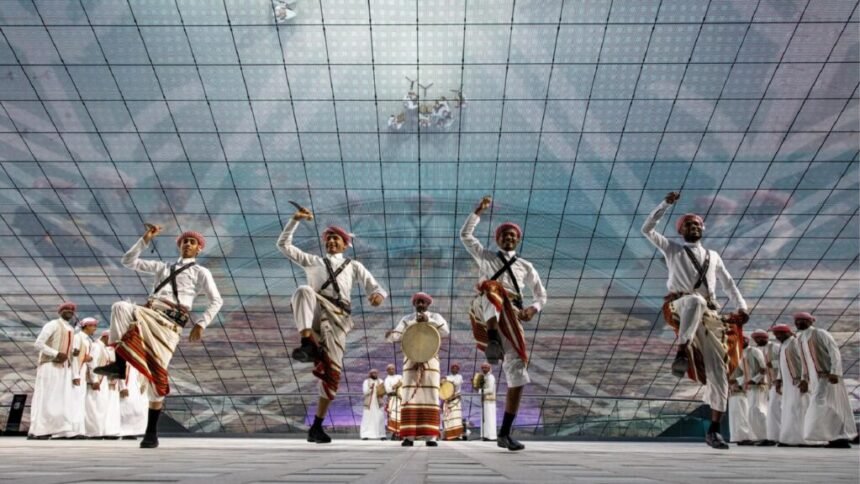
Al Ayyala, super famous as Gulf folk dance, people love doing it across UAE and Oman. Picture two lines of men facing off sticks held high moving in time drums and poetry maybe someone would really enjoy. Often danced in national celebrations or big events the dance shows unity teamwork and maybe even some good old strength.
Al Razfa
Closely related to Al Ayyala, Al Razfa includes chanting and rhythmic movement, sometimes with mock swords or rifles. It reflects traditional expressions of courage and tribal pride.
Al Ardah
Popular in Saudi Arabia and neighboring regions, Al Ardah is a traditional sword dance accompanied by drums and poetic chanting. It is often performed during official ceremonies and cultural festivals and symbolizes bravery and heritage.
Liwa Dance
The Liwa dance has African influences and is common in coastal Gulf communities. It features fastpaced drum rhythms, wind instruments, and energetic movements, highlighting the region’s historical trade and cultural connections with East Africa.
Traditional Gulf Music and Instruments
Gulf folk music is deeply rhythmic and relies on a combination of percussion, wind instruments, and poetic vocals.
- Oud: A stringed instrument central to Gulf and Arabic music
- Tabla and Takhmer: Traditional drums that create rhythmic beats
- Tambourines: Used to enhance tempo and rhythm
- Ney and Mizmar: Wind instruments that add melodic depth
The lyrics often revolve around love, bravery, faith, nature, and daily life, sung in traditional Arabic poetic forms.
- Occasions Where Folk Dance and Music Are Performed
- Gulf folk dance and music are commonly seen during:
- National Day celebrations
- Cultural festivals and heritage events
- Weddings and family gatherings
- Religious and community celebrations
These performances help keep cultural traditions alive while educating younger generations about their roots.
Modern Influence and Preservation
Gulf countries work to keep folk traditions alive via cultural centers festivals schools and government programs as modern music and dance gain popularity with younger folks. Performances these days mix old with new staging so folk dance and music stay relevant worldwide.
Gulf folk traditions get showcased to world audiences by things like international culture festivals, maybe.
Why Gulf Folk Dance and Music Matter Today
Gulf folk dances and music? People would engage with shared history values and identity that way in a fast-changing world it might be helpful. They link past to now, giving pride and flow while showing off different ideas and fresh takes.
For artists performers and lovers of culture traditions like this still spark creativity making them a key part of Gulf history.
Gulf folk music and dance? They’re alive still reflecting soul. They share tales that celebrate unity courage and lots of culture through moving beats and thoughtful words you know like a poem. See, performances give you that deep insight into Gulf heritage whether they’re at some festival wedding or a cultural thing.