Abu Dhabi: futuristic skyline, luxury resorts, Sheikh Zayed Grand Mosque, Louvre Abu Dhabi—pretty well known today. Yet past whispers linger quiet corner, even past those tall UAE buildings.
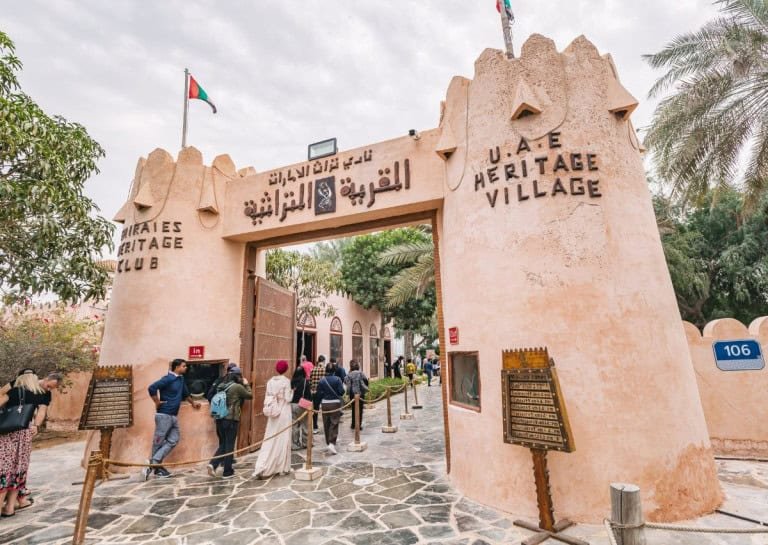
Abu Dhabi Cultural Village, aka Heritage Village, is truly captivating, with reconstruction offering glimpse into life before oil. For travellers who want to go beyond shopping malls and modern architecture, the Cultural Village offers the perfect gateway into the UAE’s roots. From Bedouin tents and traditional dhows to craft workshops and spice markets, every corner is a story waiting to be discovered.
What is the Abu Dhabi Cultural Village?
Abu Dhabi’s Cultural Village? It’s a heritage museum outside, right on Breakwater near Corniche. Operated by Emirates Heritage Club it resembles old settlement preserving Emirates lifestyle architecture traditions before 1960s.
Inside the village, you’ll find:
- Mud-brick houses
- Barasti huts made of palm fronds
- Traditional fishing boats (dhows)
- A recreated Bedouin camp
- Ancient irrigation systems
- Workshops where artisans craft pottery, metalwork, and textiles
- Spice and handicraft souks
It’s the kind of place where time slows down, offering a peaceful escape from the busy city while giving a glimpse of what Emirati life looked like generations ago.
A Walk Through History – What Life Looked Like Before Oil
Before oil changed everything, the UAE was home to a mix of coastal fishing villages, Bedouin tribes, and pearl divers. Life was simple, tough, but deeply connected to nature — especially the sea and desert.
The Cultural Village captures this world honestly:
The Desert Life (Bedouin Culture)
You’ll walk through a traditional Bedouin camp with:
- Goat-hair tents
- Clay stoves
- Coffee pots on open fire
- Camel saddles and traditional tools
This showcases how nomadic families lived, travelled, and developed deep hospitality traditions that remain central to Emirati culture today.
The Seafaring Heritage
The coastline was the heart of trade and pearl diving. The village displays:
- Wooden dhows
- Pearl-diving equipment
- Nets and fishing gear
- Maritime tools used by early seafarers
It reminds visitors that long before oil, the Gulf’s economy depended heavily on fishing and the precious natural pearl industry.
Top Attractions Inside the Abu Dhabi Cultural Village
Below is a full breakdown of what visitors will explore — perfect for your readers planning a trip.
1. Traditional Bedouin Camp
Village highlight, that’s how I’d put it. Step inside tents woven from goat hair smell Arabic coffee’s aroma over fire pits and view tools desert tribes use.
It’s a nice place for photos and maybe learn about desert nomads.
2. Artisan Workshops (Live Crafts)
One of the most exciting parts of the village is the live demonstration area where artisans perform traditional skills:
- Pottery making
- Glass blowing
- Weaving (Al Sadu)
- Metalwork and blacksmithing
- Spinning and dyeing threads
- Carpentry & dhow repair craftsmanship
Visitors can talk to the craftsmen and even purchase handmade items as souvenirs. It’s one of the few places where Emirati traditional crafts are preserved this authentically.
3. Traditional Emirati Houses
The village has beautifully reconstructed homes built in old Arabian styles:
- Wind-tower houses (barjeel)
- Coral-stone architecture from coastal communities
- Palm-leaf huts used by fishermen
- Mud-brick rooms for desert families
Walking through these will make your readers feel like they’ve stepped into the early 1900s.
4. Mini Oasis & Falaj Irrigation System
A small but interesting installation explains how ancient farmers created lush gardens in the desert.
The traditional falaj irrigation channels brought groundwater to fields — a system still used in parts of the UAE today.
5. Souk-Style Traditional Market
Visitors can shop for:
- Spices and herbs
- Incense and bukhoor
- Handcrafted jewelry
- Carpets and woven items
- Perfumes
- Dhow miniatures
- Local dates and sweets
This is a perfect place to buy authentic souvenirs at reasonable prices.
6. Pearl Diving Exhibits
Pearl diving was once the backbone of the UAE’s economy. The Cultural Village includes:
- Nose clips
- Gloves
- Oyster baskets
- Dhow tools
It’s a nostalgic reminder of how divers spent months at sea searching for rare natural pearls.
7. Waterfront Viewpoint
The village is located on the Corniche Breakwater, offering one of the best skyline views in Abu Dhabi.
Visitors can sit near the shore, watch traditional boats, and enjoy the peaceful contrast between old and new Abu Dhabi.
8. Heritage Museum Rooms
Small galleries inside the village display:
- Ancient weapons
- Old coins
- Traditional Emirati wedding clothes
- Coffee-making tools
- Vintage photographs of Abu Dhabi from 1950–1970
- Household items and jewelry
It’s like walking through a time capsule of the Emirates.
Top Things to Do in Heritage Village Abu Dhabi
Begin with the classic souk, where you will get colourful dresses, jewels made by hand, wool rugs, toys and handicrafts that are made right in the village. Observe the artisans of the watch-making craft exercise fascinating art: glassblowers, on spindly wheels, shaping clay into delicate bottles of perfume, potters, on the same wheels, shaping clay into khanjars of curved swords.
Tour the museum located in an ancient fort with a traditional wind tower, exhibits exciting objects of the pearl-diving industry, ancient weapons, and exquisite jewellery. Get henna by professional artists, get to play with camels and Arabian horses, and have a glimpse into tents. The small spice store has dried spices that are gift-worthy.
Location and How to Reach:
Heritage Village is located on Corniche Breakwater, adjoining the Marina Mall, Abu Dhabi Theatre Road. It only takes a five-minute drive through the Corniche waterfront to Corniche Street, onto King Salman Bin Abdulaziz Al Saud Street, and then right onto Al ‘Alam Street.
The village is accessible within 30 minutes to visitors of Yas Island through the Sheikh Khalifa Bin Zayed Al Nahyan Highway E12 across Saadiyat Island.
When arriving by air, the Abu Dhabi International Airport is just 35 minutes away in a westward direction on the E20, to the Al Khaleej Al Arabi Street and then signs to Marina Mall. There is onsite parking, and many of the visitors prefer to park at Marina Mall nearby and take a short taxi or bus to the area.
Read More About Gulf Airline Offers 2025