Saudi Arabia new tourist cities : Tourism scene there’s changing fast. Think about improving cities building new cool places maybe even giving old cultural spots a fresh vibe. Kingdom will sidestep over reliance on oil aiming for lively tourist spots Vision 2030 suggests. Here’s a look at Saudi Arabia’s rising tourist hubs perhaps soon destinations plus what makes them special.
NEOM (Northwest Red Sea region) :
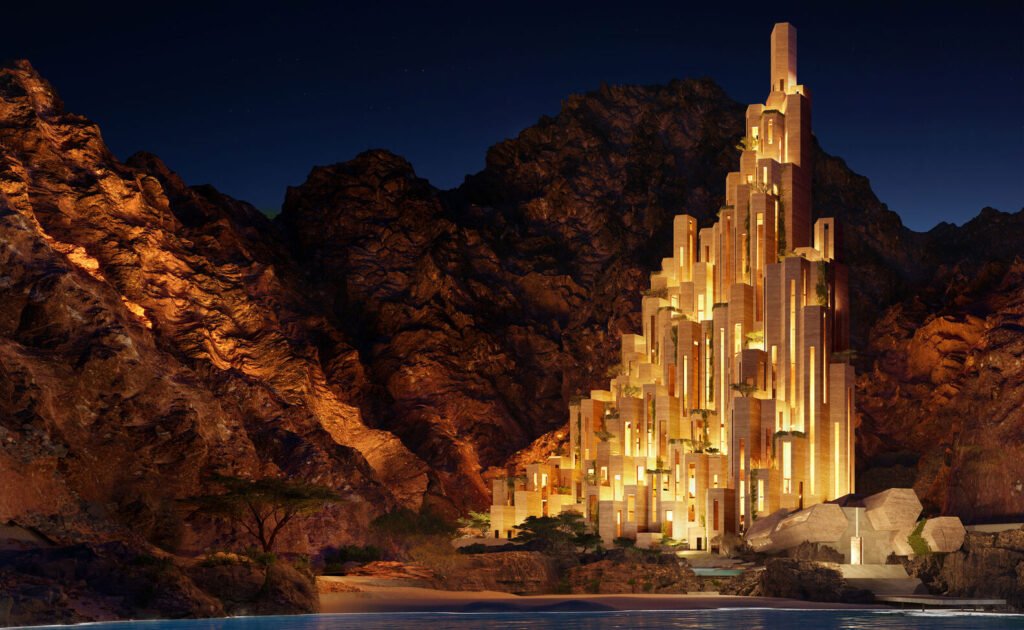
NEOM is possibly the most ambitious project among the Kingdom’s destination cities. It covers 26,500 km² along the Red Sea coast in the Tabuk region and is marketed as a futuristic megacity powered by renewable energy.
Key features:
“The Line,” a planned 170 km-long linear city that will be car-free and is intended to accommodate millions in a slim, efficient layout.
– A luxury island resort area called Sindalah designed for high-end tourism, including yachts, spas, and resort villas along the Red Sea. – A mountain resort part, like Trojena, offering year-round activities, including skiing, which is unique for this region
Why it’s important:
NEOM represents Saudi Arabia’s goal to shift from oil-based to tourism and innovation-focused growth. It aims to offer world-class hospitality, leisure activities, nature experiences, and tech-driven living in one location.
Considerations: Much of NEOM is still under development, meaning visitors may encounter early-phase resorts or foundational attractions. Read More about NEOM
AlUla (Northwest heritage region) :
While AlUla is not entirely new—it is a historical oasis with ancient settlements—its evolution into a significant tourist hub is recent. The local commission, the Royal Commission for AlUla, is actively developing it into a luxurious destination focused on heritage, culture, and nature.
Highlights:
– The project aims to contribute about SAR 120 billion ($32 billion) to the national GDP and create around 38,000 jobs by 2030.
– AlUla became the first city in the Middle East to receive accreditation from Destinations International, indicating its readiness for global competition.
– Projects here include luxury resorts, enhancements to heritage sites, and eco-tourism in the sandstone cliffs and lush oasis environment of northwestern Saudi Arabia.
Why it’s important:
AlUla serves as a bridge between Saudi Arabia’s cultural heritage and modern luxury tourism. It offers travelers a unique experience distinct from urban resorts, featuring desert majesty, unique geology, ancient tombs like the UNESCO site of Hegra, and a growing high-end hospitality sector.
Considerations: Although facilities and infrastructure are improving rapidly, they may not yet be as comprehensive as those in fully developed tourist cities. Visitors may need to plan for access and transport.
Diriyah (Near Riyadh)
Diriyah is the historical home of the Al Saud family and the original capital of the Saudi dynasty. The development project seeks to turn it into a world-class heritage destination with luxury hospitality and lifestyle options.
Key elements:
– The project covers around 14 km² and includes plans for numerous luxury hotels (like Ritz-Carlton, Park Hyatt, and Raffles), cultural attractions, restaurants, and lifestyle retail.
– It features the ancient UNESCO-listed Turaif district and aims to combine history with modern amenities and tourism infrastructure.
Why it’s important:
Diriyah provides an accessible destination for tourists visiting or passing through Riyadh. It offers a chance for cultural immersion combined with high-end services. It showcases Saudi Arabia’s rich heritage in a modern resort-city style.
Considerations: Due to its closeness to Riyadh, Diriyah may feel more urban and integrated into the capital region rather than a complete resort getaway.
Soudah Peaks (Asir Province mountain destination) :
Soudah Peaks is a mountain tourism project situated in the Asir region of southwestern Saudi Arabia. It aims to take advantage of the country’s less-explored rugged mountain terrain for nature and adventure tourism.
Highlights:
– The project covers a vast area of 627 km² and features elevations up to 3,015 m above sea level, offering a cooler mountain climate and diverse scenery.
– It has an investment of around USD 7.7 billion and aims to diversify the tourism offerings beyond beaches and deserts.
Why it’s important:
Soudah adds diversity to Saudi Arabia’s tourism landscape, offering opportunities for adventure tourism, hiking, and nature escapes in cooler climates.
Considerations: As with many new city projects, full infrastructure and resort services may take time to develop. Travelers should check what is operational when planning their visit.
Yanbu City (Red Sea coastal transformation) :
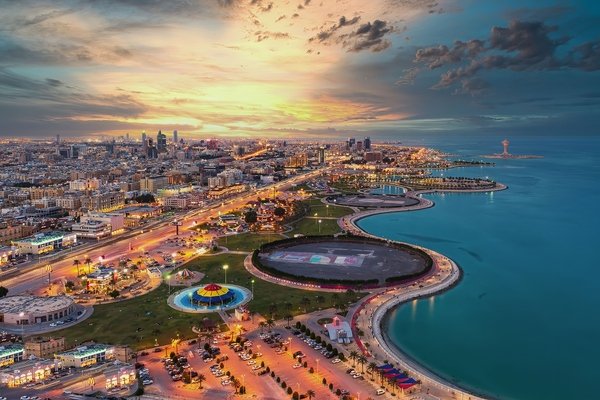
Yanbu, located on the Red Sea coast of western Saudi Arabia, is being developed into a major tourist center by the Baheej Tourism Development Company.
Key details:
– The initial tourist destination project covers 32,000 m² of the waterfront area of the Royal Commission at Yanbu. It features a beach escape, lifestyle hotel, and tourist activation center.
– The region combines beaches, marine environments, and Saudi heritage, with an emphasis on sustainability and local culture.
Why it’s important:
The Red Sea coast is becoming a key area for resort tourism. It offers budget options that compete with larger cities while maintaining high-quality accommodations. Yanbu provides travelers with beach access, scenic views, good weather, and a less crowded environment than many international beach resorts.
Why Saudi Arabia is focusing on new tourist cities
Economic diversification: With oil revenues vulnerable to shifts, Saudi Arabia views tourism as a vital growth engine and source of jobs. Major projects play a key role in this shift.
Global competition for tourists: The country is working to become a leading global destination, offering various niche experiences in heritage, luxury, nature, and adventure.
Regional accessibility: For travelers from South Asia and the Indian subcontinent, including India, Saudi Arabia is becoming more accessible due to improved visa processes and international flights, making these cities attractive options.
Variety of experiences: Instead of only sun-and-sand vacations, Saudi Arabia’s new destinations offer mountains (Soudah), coastlines (Yanbu, NEOM), heritage (Diriyah, AlUla), and modern luxury (NEOM). This variety appeals to repeat visitors and multi-destination travelers.
Travel considerations & tips :
Check readiness: Since many sites are new or under development, some resorts or city amenities may still be unfinished. Verify what is open when planning your visit.
Visa and entry: Check current visa requirements for your nationality (India, in your case) and any entry criteria.
Best time to visit: Some destinations have better weather during certain seasons. For beach resorts along the Red Sea, the cooler months (October-April) are usually more pleasant.
Transport & connectivity: Some of these cities may need domestic flights or transfers from major airports. Plan for logistics accordingly.
Cultural and climate differences: Be respectful of local customs and weather conditions (like desert heat or mountain cold).
Budget: Some new resorts may be premium or luxury, while others may offer promotional prices.
Stay flexible: With many projects in progress, new attractions or resorts may open, and special early-visitor deals may be available.
Also Read About Ras Al Khaimah – A Luxury Resort Destination